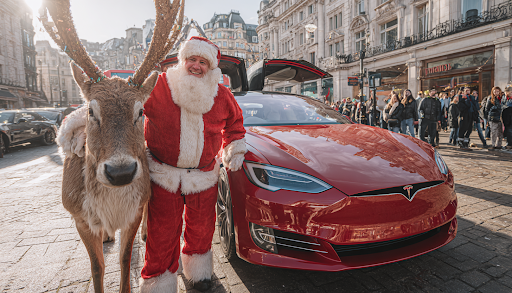
- A renewable-electric sleigh could cut Santa’s festive emissions by three quarters
- The Electric Car Scheme assessed the climate impact of a 160-million-kilometre Christmas Eve trip
- Reindeer-powered sleighs produce four times more emissions than electric alternatives
Santa’s iconic Christmas Eve journey could become far more climate-friendly if he swapped reindeer for a sleigh powered by renewable electricity, according to new figures released by The Electric Car Scheme.
Each year, Santa is estimated to travel around 160 million kilometres in roughly 34 hours to reach children across the globe. This extraordinary journey currently carries a substantial environmental cost.
The reindeer-powered sleigh is estimated to generate approximately 33,200 metric tons of CO2 equivalent emissions. Much of this impact stems from methane produced by reindeer digestion, a greenhouse gas that is more than 20 times as damaging to the climate as carbon dioxide.
If Santa were to make the switch to an electric sleigh running on renewable power, emissions would fall to around 8,320 metric tons of CO2e. The resulting 75% reduction serves as a compelling illustration of the potential of electric transport to significantly cut emissions and support global net zero goals.
Diesel sleigh – 27,680 metric tons CO2 (17% reduction)
Thom Groot, CEO and co-founder of The Electric Car Scheme, commented:
“Santa’s journey is a useful illustration of why the switch to electric matters. Even using current European electricity grids, electric vehicles deliver 70% lower emissions than reindeer. But when you power them with renewables, you get a 75% reduction. This isn’t just about Christmas – it’s about how businesses and individuals across the UK can make meaningful environmental choices. Electric vehicles are already changing how we travel and reducing our carbon footprint.”
Battery electric vehicles operating on the projected 2025 EU electricity mix produce approximately 63 grammes of CO2e per kilometre. Using renewable electricity, this figure drops to just 52 grammes per kilometre. In comparison, a medium petrol car emits 143 grammes of CO2 per kilometre, and a diesel car 173 grammes per kilometre.